Music by Humans
An app to filter out AI-generated musicians from your Spotify playlists.
Background
A friend and I noticed that Spotify was filling up with AI-generated artists, and there was no way to tell. You could discover a new artist you found interesting, start following them, and then find out they didn't exist in the real world. Spotify doesn't label AI artists, so users have no visible way to distinguish human-made artists from algorithmically generated profiles.
Making it as an artist is hard enough already. When someone streams an AI track, the royalties go to the bot operator, not a real musician. We wanted to make sure real musicians weren't being drowned out by content with no human behind it. The goal wasn't necessarily to block all AI content, but to create awareness towards what you're listening to.
Challenges
This project presented a few issues:Blocking wasn't possible. Spotify's API didnt't allow third-party apps to remove or block artists directly, so the user had to do it themselves. This created a fundamental design problem: how can we signal that artists in their listening history might be AI-generated without giving the users options to block them directly?
The API kept shrinking. Spotify gradually deprecated useful endpoints over the course of the project, which meant features we'd planned or built had to be reconsidered as the platform pulled the rug out from under us.
Detection is genuinely hard. There's no reliable way to determine whether an artist is AI-generated, and it kept getting harder. We had to factor in uncertainty into the designs, making it clear that we did not know for sure.
First iteration
I started with rough sketches and lists, mapping out what information mattered and how it should be structured. From there I went straight into code, implementing the design directly through claude, experimenting without detailed designs.
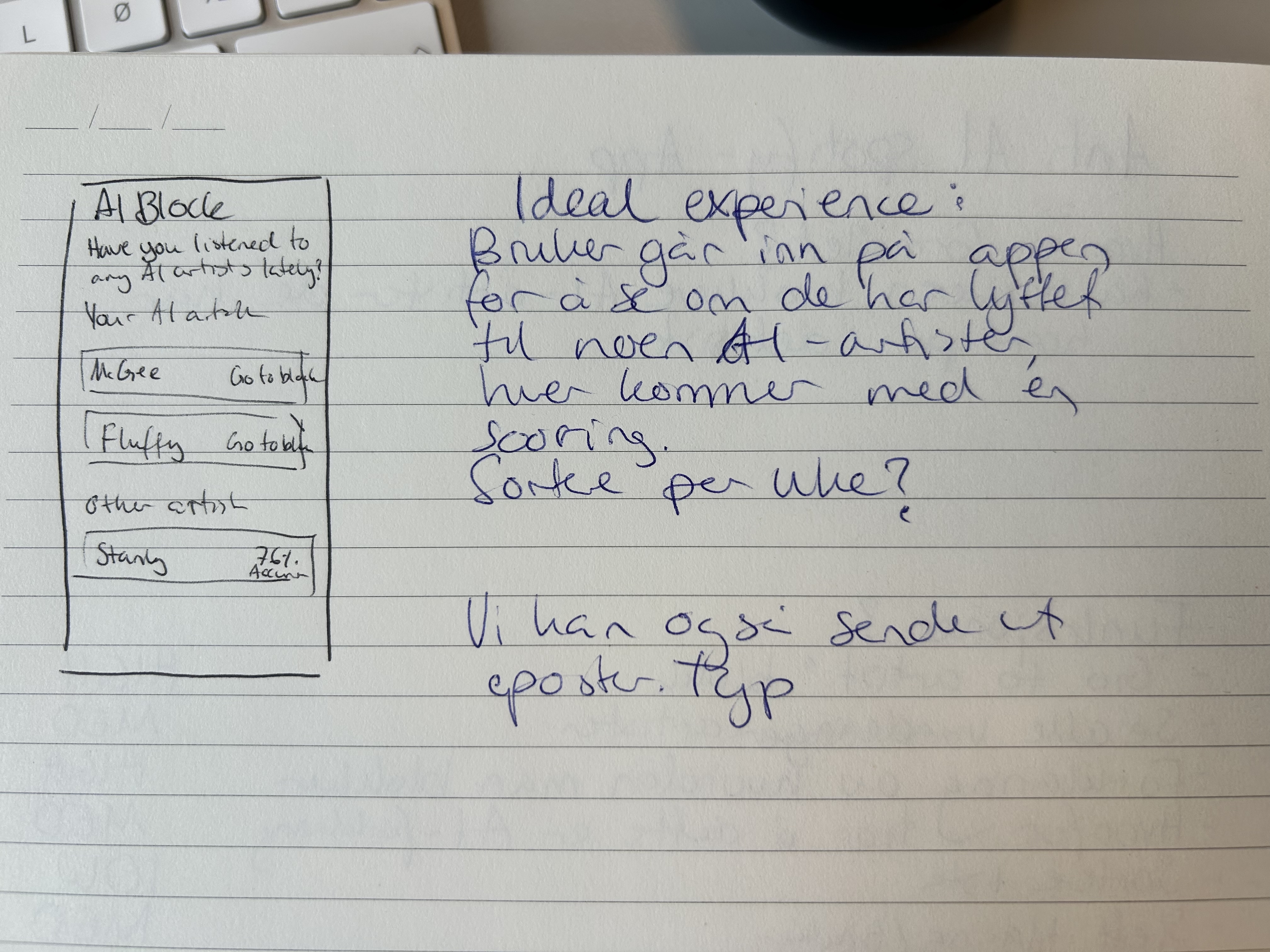
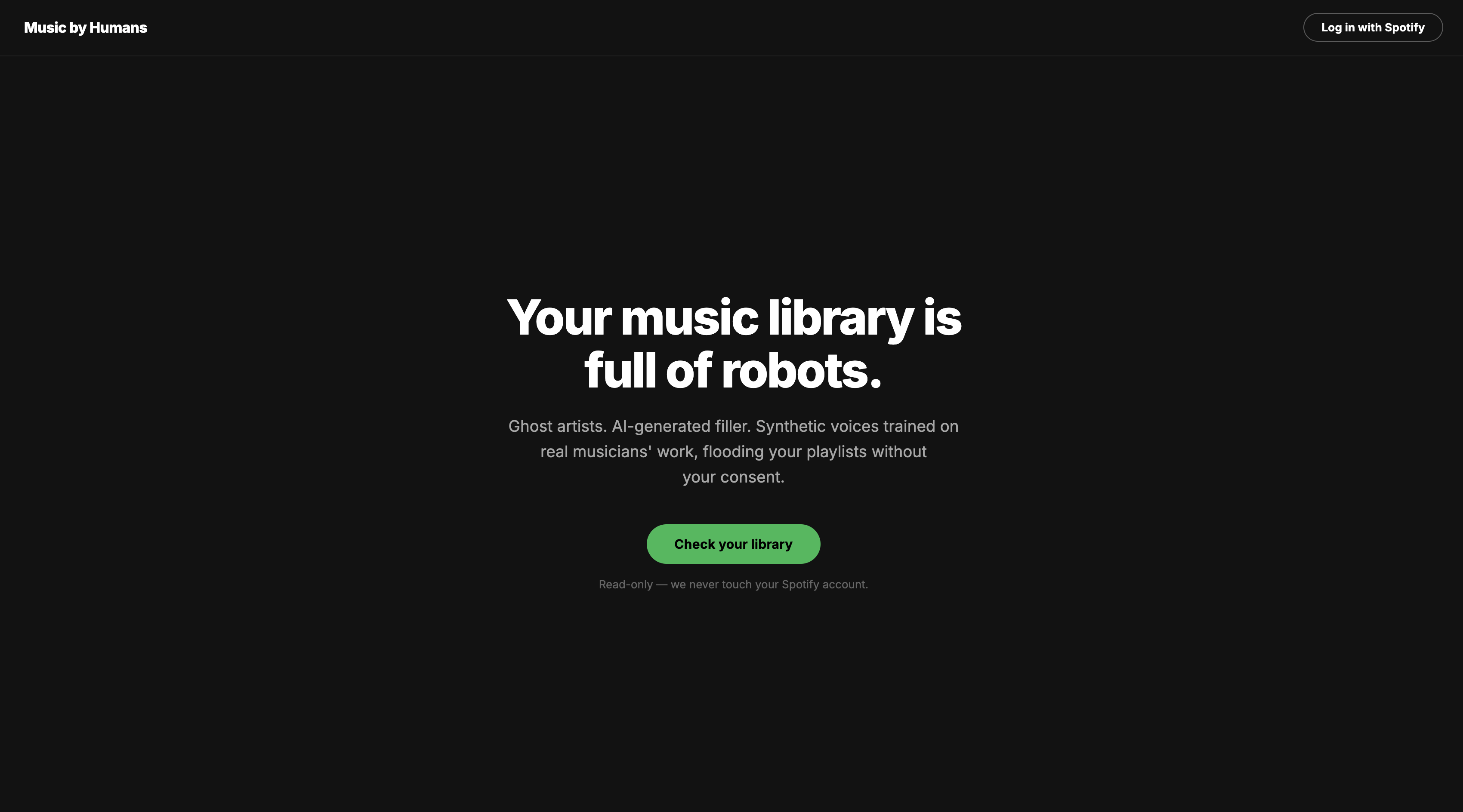
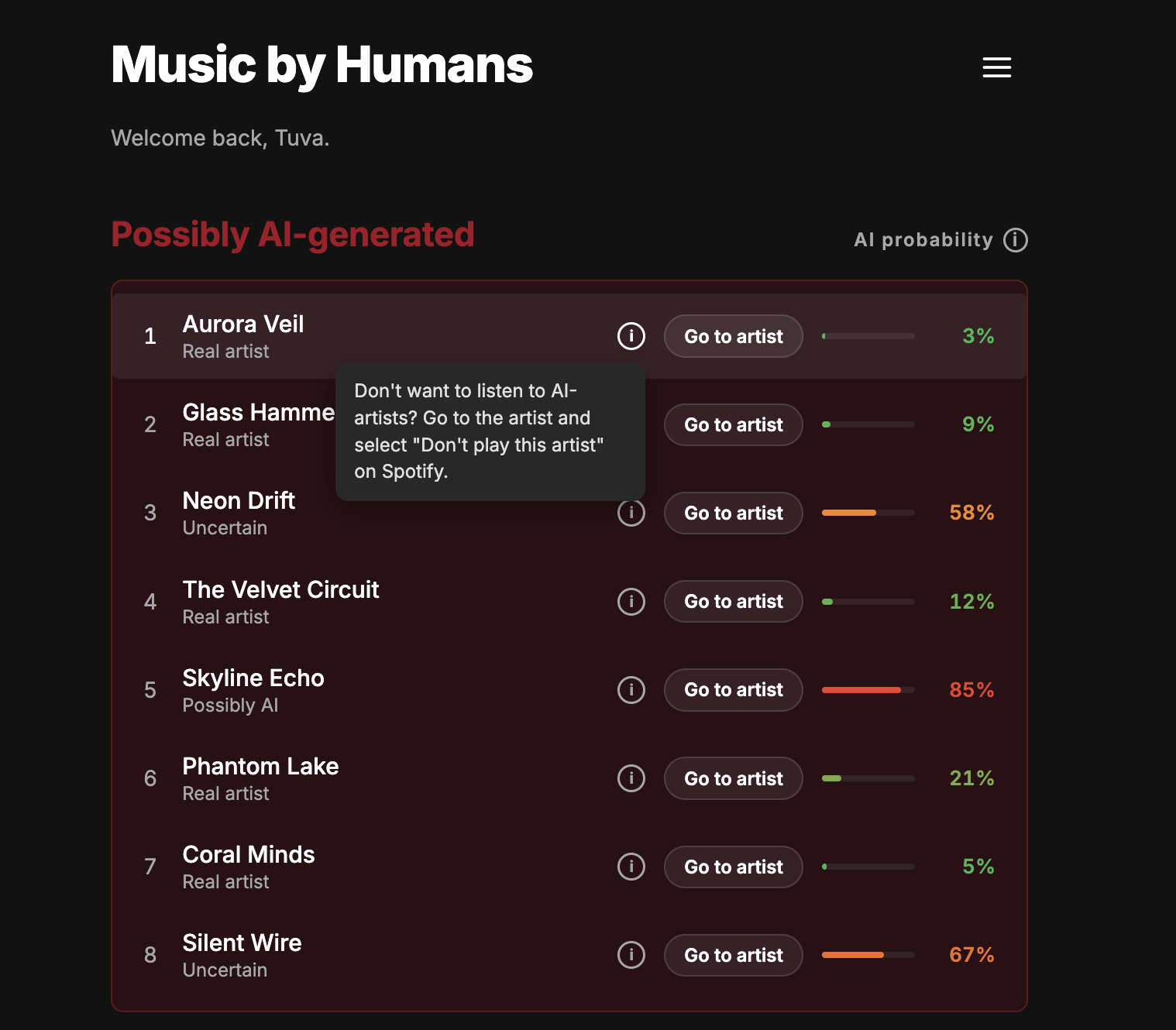
The first version was built around a score, a kind of "AI probability index" per artist. The idea was that a percentage and a colour-coded bar would let users quickly gauge how likely an artist was to be AI-generated.
User testing
I put the design in front of some friends in a casual setting. I gave them a simple scenario: You saw an Instagram ad that said something about listening to AI artists, you tapped it, and now you're here. The question was just: "What do you think this is?" It quickly revealed where the design was failing.
Three things kept coming up. First, the scoring confused people. Nobody knew what it meant or which direction was good. Is a high score human or AI? Second, nobody understood that blocking was something they had to do themselves. The app looked like it was in control, when really it was just showing information. Third, the dark Spotify-inspired design made people think they were looking at an official Spotify feature, which made the confusion worse.
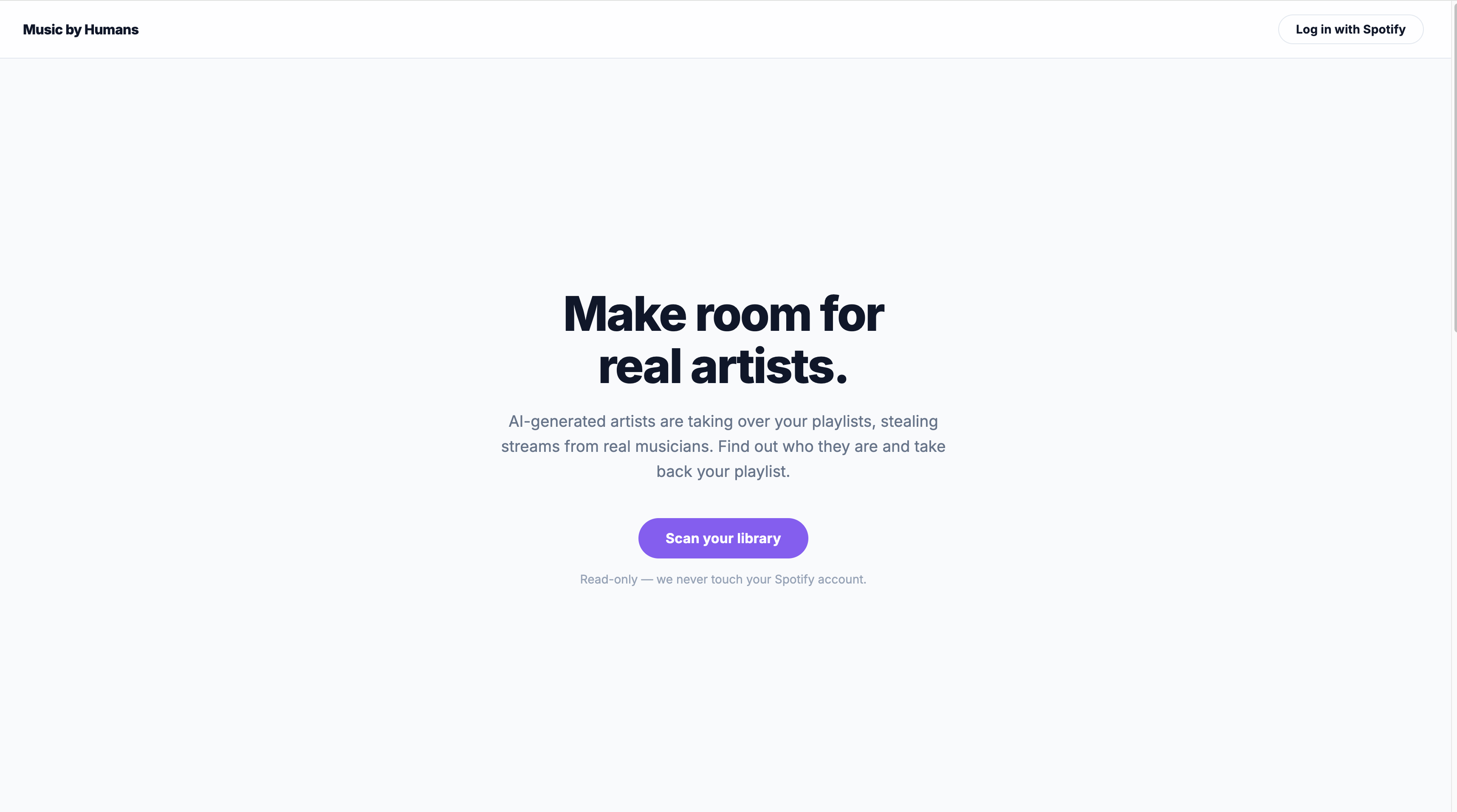
That last point led to a deliberate visual reset: the new design uses a completely different look to make it immediately clear this is a third-party tool, not something built by Spotify.
The solution
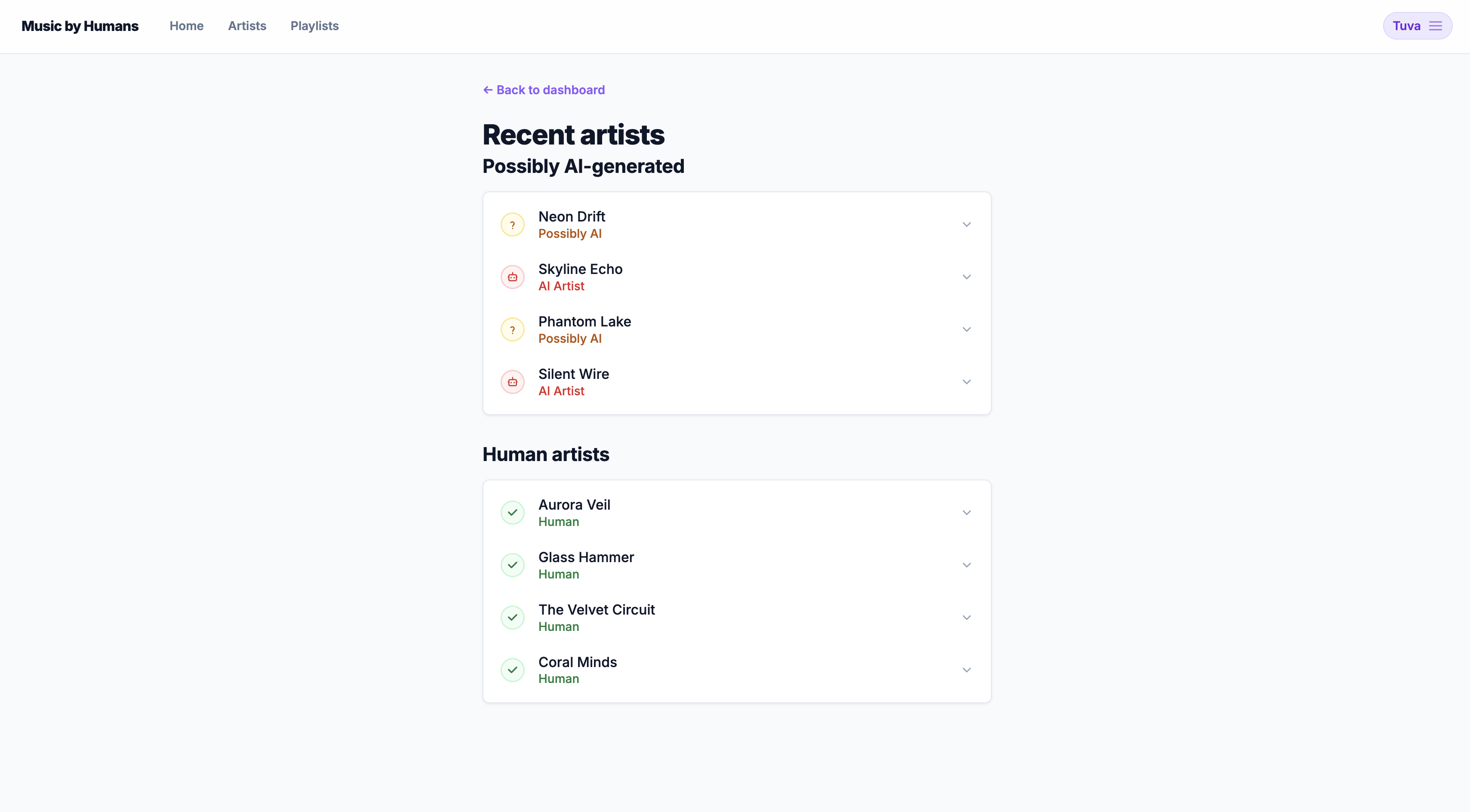
After many iterations, the redesign moved away from scores entirely. Instead of a number, each artist gets a clear label: Human, Possibly AI, or AI Artist. The landing page lead with a message for real artists, not a warning about robots, setting the right tone before users log in.
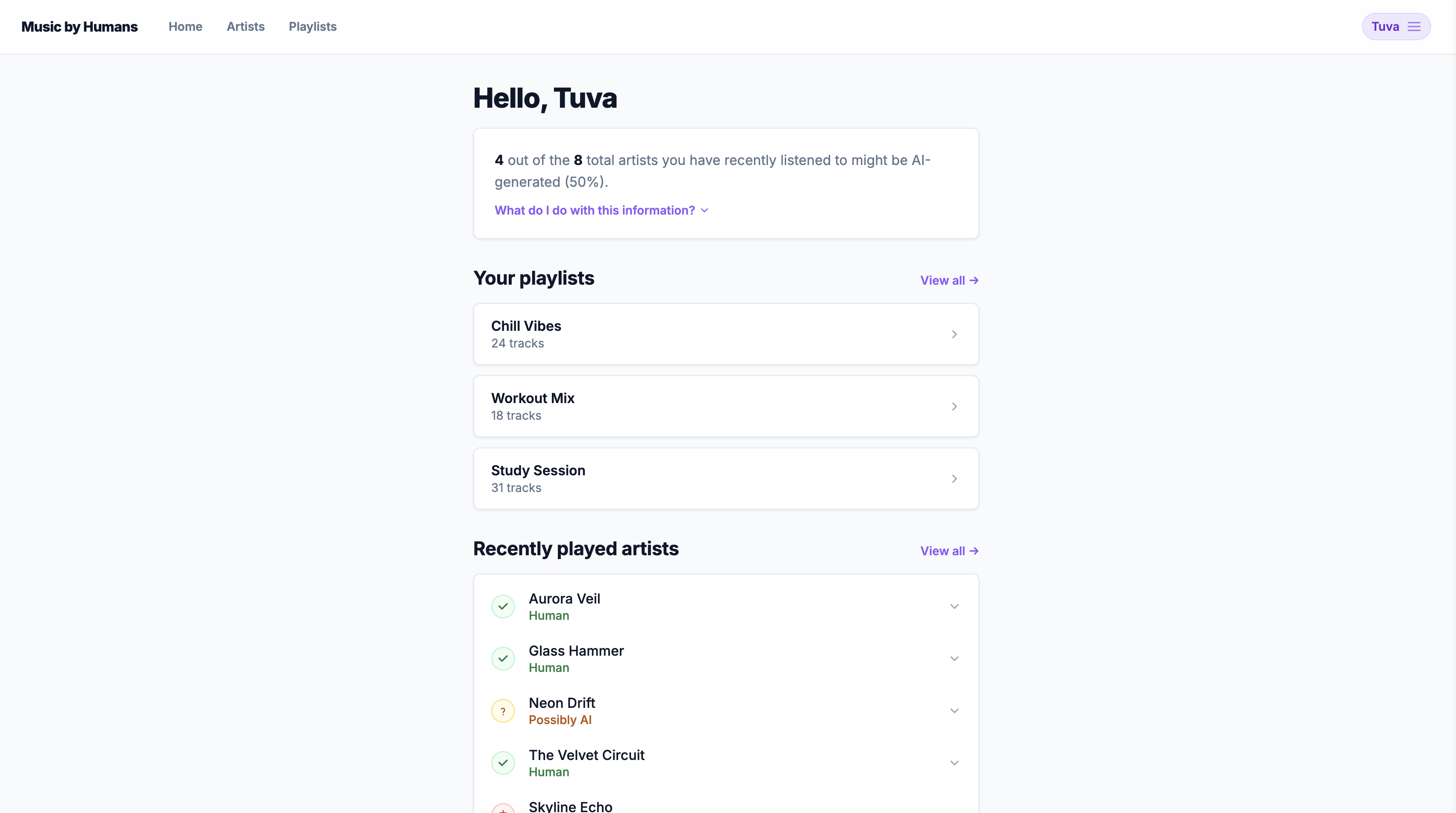
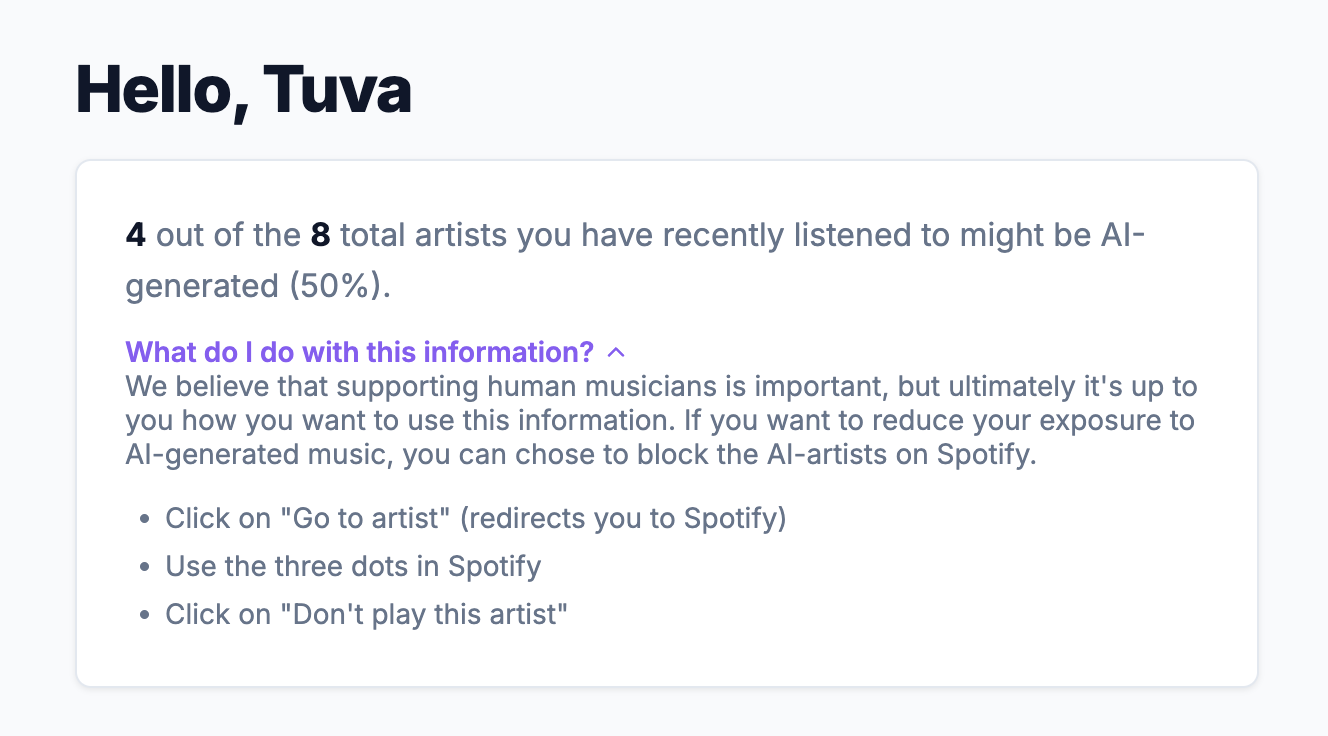
After logging in, the dashboard gave an immediate overview of how many of your recently played artists might be AI-generated, with a prominent "What do I do with this information?" link that explained the blocking process step by step.
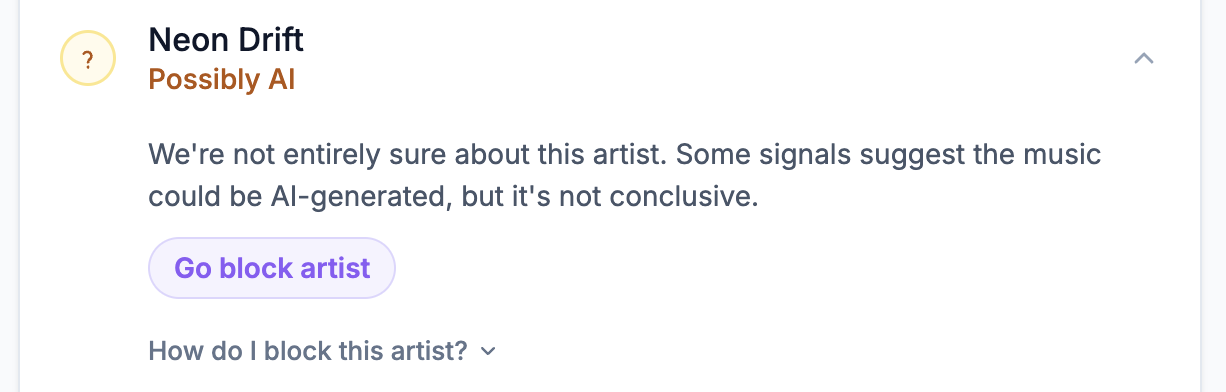
The artists page split the list into two clear groups, and each entry could be expanded to show more context, including whether the system is uncertain.
Reflection
The project was eventually shelved. Spotify blocked access in a way that made it impossible to continue. Spotify later launched the "Verified by Spotify" which aims to highlight real artists. We still don't think this fully solves the issue of not knowing the origin of new artists, but it is a step in the right direction.
The most interesting design challenge wasn't the visual side, it was figuring out how to communicate uncertainty. When you can't be certain whether an artist is AI-generated, how do you say that without either alarming people or being so vague it's useless?
This was also one of my first projects working closely with Claude throughout the process. I wrote very little of the frontend code myself. It was a useful way to explore what that kind of collaboration looks like in practice, where the thinking and direction is mine, but the execution is shared.